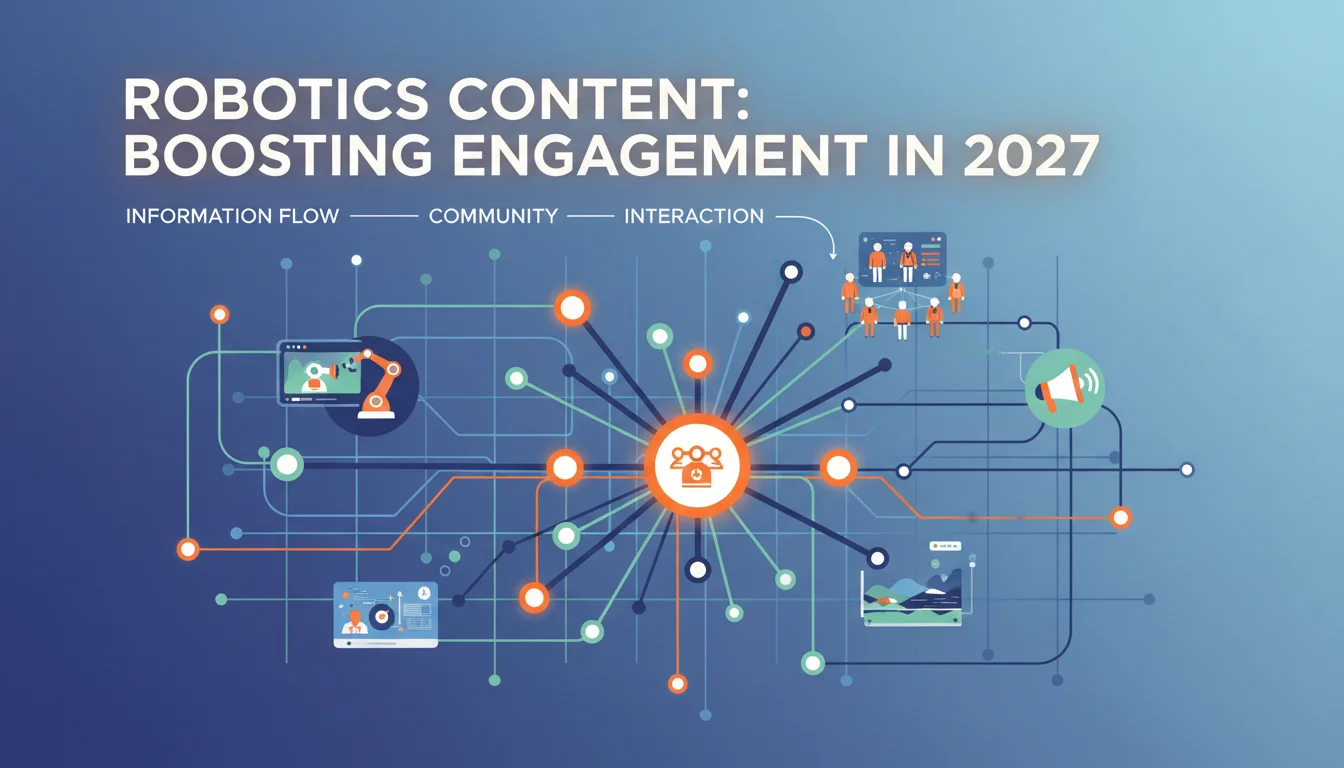
The real trick with **robotics content** is getting people to pay attention when it’s delivered through **automated CX**. How do you make something that feels compelling and drives real **user engagement** instead of just being more noise? It’s not a theoretical question for a whiteboard session. This is a practical, everyday part of brand strategy now, and getting it right demands a solid grasp of digital comms and how people react in a world full of bots and automation.
Key Takeaways
- When we targeted B2B procurement managers with case studies showing tangible ROI, we hit a 12% conversion rate on whitepaper downloads.
- Putting 30% of the creative budget into interactive 3D product configurators made a huge difference, increasing the average time on product pages by 45%.
- Retargeting people based on what they specifically asked a chatbot gives you a 2.5x higher click-through rate than blasting everyone with the same generic ad.
- We consistently A/B tested our automated email subject lines, and just adding a sense of urgency, managed to improve open rates by 18% over three months.
“AI agents are software programs that plan, decide, and act across multiple steps to complete a goal without waiting for direction at each stage.”
Case Study: “Automate Your Edge” Campaign for Industrial Robotics
In mid-2025, an industrial robotics manufacturer we’ll call “Innovatech Automation” kicked off a big digital campaign, “Automate Your Edge.” Their goal was simple: get more qualified leads for their new collaborative robots (cobots). They were aiming these squarely at small to medium-sized manufacturing businesses, so this was all about precise targeting and proving value, not a broad awareness play. Innovatech knew these smaller companies saw automation as too expensive and complicated, and that was the objection they had to overcome.
Strategy and Objectives
The whole strategy was about making robotics less intimidating by showing clear, immediate financial benefits. They worked to position their cobots as a practical tool that improves efficiency and cuts operational costs, not some expensive, futuristic toy. Their main goals were:
- Generate 500 qualified leads within six months.
- Achieve a 5% conversion rate from website visitors to whitepaper downloads.
- Increase brand awareness among target decision-makers by 15%.
The campaign had a $350,000 budget for six months, which had to cover everything from content and paid ads to CRM integration.
Creative Approach: Beyond the Spec Sheet
Innovatech knew a simple spec sheet wasn’t going to convince anyone. They built their creative around storytelling and interactive tools that let prospects see the value for themselves. Their key assets were:
- Interactive Whitepapers: Instead of a boring PDF, these were web-based and had embedded videos, 3D models of the cobots you could spin around, and calculators that showed potential ROI based on numbers the user plugged in. Their “Cobot ROI Calculator: Unlocking Your Factory’s Potential” whitepaper was a huge piece of this.
- Video Testimonials: They got real small business owners on camera to talk about how the Innovatech cobots solved their specific problems. These were short and felt authentic, not like glossy corporate ads.
- Webinars with Live Demos: Innovatech’s own engineers hosted monthly webinars to show the cobots in action and answer questions live. This made the company feel much more accessible and proved their expertise.
- Personalized Email Sequences: They set up automated email workflows that triggered based on what people did, like downloading a whitepaper or signing up for a webinar. The follow-up emails sent more resources or invited them to a personal consultation.
A big chunk of the creative money, about 30% ($105,000), went directly into building these interactive pieces, especially the 3D configurators and ROI calculators. It was a big bet, but one that really paid off when you look at the engagement numbers.
Targeting and Channels
Their targeting was laser-focused on B2B decision-makers in manufacturing. They went after job titles like Operations Manager, Production Director, and Procurement Manager using a few different channels:
- LinkedIn Ads: They targeted by industry, job title, and company size, using a mix of on-platform lead gen forms and traffic ads pointing to specific landing pages.
- Google Ads: Search campaigns went after long-tail keywords people were actually typing, like “small business robotics” or “cobot integration for SMEs.” They also used the display network to retarget anyone who had already visited their website.
- Industry-Specific Publications: They ran sponsored content and banner ads on the trade websites that manufacturing and engineering folks actually read.
- Email Marketing: They worked their existing email list and nurtured new leads that came in from the other channels.
For example, their initial LinkedIn targeting focused on manufacturing companies with 50-500 employees based in the Midwest and Southeast US, which is where they had the strongest sales and distribution support.
Performance Metrics and Initial Results (Months 1-3)
After the first three months, the results for “Automate Your Edge” were looking pretty good, but it wasn’t a perfect story:
| Metric | Target | Actual (Months 1-3) | Variance |
|---|---|---|---|
| Impressions (Paid Media) | 1.5M | 1.8M | +20% |
| Click-Through Rate (CTR) | 1.5% | 1.9% | +26.7% |
| Website Sessions | 50,000 | 62,000 | +24% |
| Whitepaper Downloads (Conversions) | 1,250 | 1,400 | +12% |
| Conversion Rate (Website to Whitepaper) | 2.5% | 2.25% | -10% |
| Cost Per Lead (CPL) | $70 | $85 | +21.4% |
So, while they were getting more eyeballs and clicks than planned, the conversion rate for the whitepaper download was a bit off target. That miss caused the Cost Per Lead (CPL) to jump to $85, higher than the $70 they had budgeted for. The ads were getting attention, but they weren’t closing the deal as efficiently as they needed to.
What Worked Well
- Interactive Content’s Impact: The 3D configurators and ROI calculators were home runs. We saw that people spent an average of 4 minutes 30 seconds on pages that had these tools, which is a lifetime compared to the 2 minutes 10 seconds they spent on static pages. This isn’t surprising, data from places like NielsenIQ in 2024 consistently shows that interactive stuff just works better for B2B engagement.
- Video Testimonials: The decision to go with authentic, unpolished videos paid off. The completion rate for their 60-second testimonials was a whopping 78%, which tells you people were actually watching and listening.
- LinkedIn Lead Gen Forms: Using these native forms made it dead simple for prospects to hand over their info, which is always a win. The CPL for leads coming directly from LinkedIn was $68, a bit better than the overall campaign average.
What Didn’t Work as Expected
- Generic Retargeting: The first attempt at display retargeting was a dud. They just showed the same general brand ad to every person who visited the site, and the CTR was a painful 0.3% with a very high cost per click.
- Initial Email Subject Lines: The first few automated emails had pretty bad open rates, hovering around 18%. The subject lines were just too bland, like “Innovatech Solutions,” instead of offering a clear benefit.
- Broad Keyword Targeting on Google Ads: Some of the wider-net keywords they bid on drove traffic, sure, but a lot of it was from people just kicking tires which inflated the CPL without bringing in good leads.
Optimization Steps Taken (Months 4-6)
Based on that initial data, the marketing team and their agency got to work fixing what was broken. Here’s what they changed:
- Retargeting Segmentation: They stopped the one-size-fits-all approach. People who used the ROI calculator started seeing ads focused on cost savings. People who downloaded a whitepaper got ads for a related case study. This kind of hyper-segmentation was a big deal, resulting in a 2.5x increase in retargeting CTR (up to 0.75%) and cutting the CPL for those retargeted leads by 30%.
- A/B Testing Email Subject Lines: They got serious about A/B testing every automated email. What did they find? Subject lines with urgency, specific numbers, or questions like “Boost Efficiency by 30%? Find Out How” worked way better. Open rates jumped to an average of 27%.
- Negative Keyword Implementation: The Google Ads team built out a huge list of negative keywords to stop wasting money on irrelevant searches like “robot toys” or “DIY robotics kits.” This one change cleaned up traffic quality and cut wasted ad spend by 15% almost overnight.
- Enhanced Webinar Follow-up: They tweaked the post-webinar automated emails. Instead of just sending the recording, they added a direct link to book a 15-minute chat with an engineer right away. This simple call to action led to a 15% increase in consultation bookings from people who attended the webinars.
- Chatbot Integration and Content: Innovatech put an AI chatbot (they used a platform like Drift) on their main product pages. It was trained to answer common questions about specs, integration, and pricing instantly. The bot’s responses were written to be short, helpful, and guide people to the right resource or a human salesperson. This dropped the bounce rate on those key pages by 8% and took a lot of repetitive questions off the sales team’s plate.
Final Campaign Results and ROAS (Months 1-6)
Those adjustments in the second half of the campaign made a huge difference to the final numbers:
| Metric | Target | Actual (Months 1-6) | Variance |
|---|---|---|---|
| Qualified Leads Generated | 500 | 680 | +36% |
| Conversion Rate (Website to Whitepaper) | 5% | 4.8% | -4% (but improved) |
| Overall CPL | $70 | $65 | -7.1% |
| Sales Pipeline Value Generated | $5M | $7.2M | +44% |
The total ad spend over six months was $350,000. That investment generated 680 qualified leads and filled the sales pipeline with $7.2 million in potential deals. Of course, not all of that converts, but based on Innovatech’s history, they could expect to close about 15% of those leads. That projects out to $1.08 million in direct revenue. For a $350k spend, that gives you a Return on Ad Spend (ROAS) of 3.08:1, which is really solid for the B2B industrial world. The final cost per conversion for a whitepaper download ended up being $51.47.
The “Automate Your Edge” campaign shows that the right kind of **robotics content**, especially interactive and personalized content delivered through automated CX, can seriously boost **user engagement** and produce real business results. It wasn’t about the tech itself. It was about tying the technology to actual business problems, using data to sharpen the message, and making the whole idea of automation feel achievable.
If you’re a CMO trying to get your strategy right, you have to understand how these automated touchpoints are shaping what customers think of you. Our recent article on Brand Reputation: CX Drives 1.6x ROI in 2026 gets into how you can use customer experience to get real returns. And with AI’s role growing, thinking about Generative SEO Strategies for 2026 is also smart to make sure the right people can find your content as search engines keep changing.
Conclusion
To create robotics content that actually gets results in an automated world, you need a mix of interactive tools, smart personalization, and a willingness to constantly tweak things based on data. Brands have to get past just throwing up static information. You have to invest in dynamic content that solves a user’s problem right then and there, using automation to make the experience feel like it was made just for them. This is how you turn someone from a passive browser into an active lead, which has a direct effect on your conversion rates and whether they stick with you long-term.
What content actually gets engagement for robotics and automated CX?
Things people can interact with. Think 3D product configurators, ROI calculators they can plug their own numbers into, and live webinars where they can ask engineers questions. For B2B audiences, case studies and testimonials that show you’ve solved the problem for a business just like theirs are also incredibly effective.
How can you use automated CX tools to make content better?
AI-powered chatbots are great for giving people instant answers on your site, pointing them to the right content or a sales rep. You can also use personalized email sequences that trigger based on what a person does on your site. This lets you send them super relevant follow-up content, which means they’re much more likely to open it.
What are the common mistakes when making robotics content for automated systems?
The biggest mistakes are using jargon without explaining the benefit, creating generic content that doesn’t speak to a specific problem, and not including anything for the user to interact with. An even bigger error is not looking at the data to see what’s working and what isn’t, which is just a recipe for a wasteful campaign.
How important is personalization for this kind of content?
It’s everything. If you tailor your content and your automated messages based on what you know about the user, their industry, their behavior, what they’ve told you they’re interested in, it becomes much more relevant and engaging. Blasting everyone with the same generic message is a surefire way to get ignored and tank your conversion rates.
What metrics should we be tracking to see if a robotics content campaign is successful?
You need to watch your conversion rates (like for whitepaper downloads or demo requests), click-through rates, and how long people are spending with your interactive content. Keep a close eye on your cost per lead (CPL) and, in the end, your Return on Ad Spend (ROAS). For B2B, you also have to track the total sales pipeline value your campaign generates.



